Health & Environment
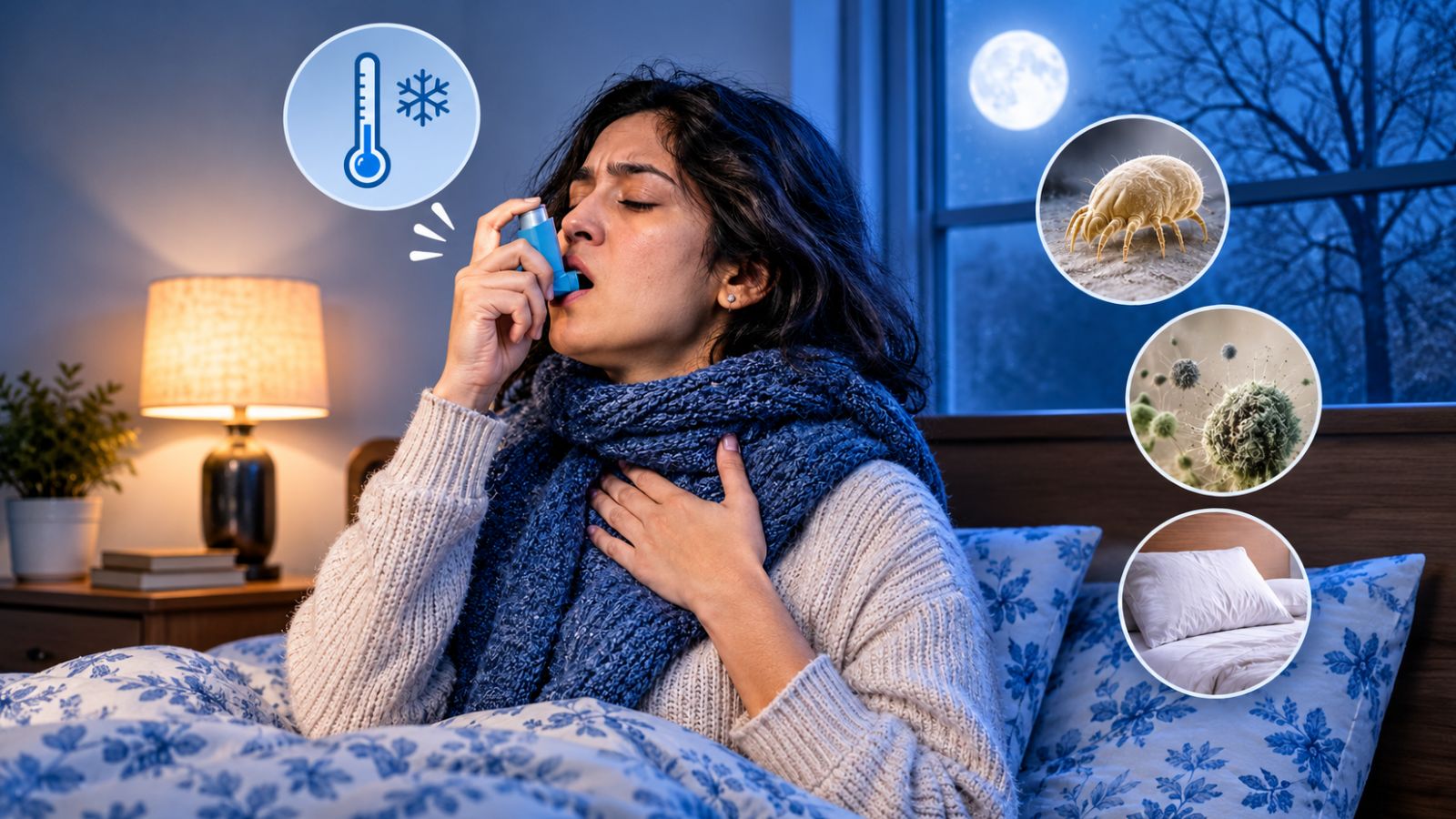
Medical experts explain causes and prevention of winter asthma flare-ups
The Indian Express2h
THE BRIEF
1
Winter air and circadian rhythms can cause nighttime asthma symptoms and wheezing to worsen due to airway constriction and increased allergen exposure.
2
Dr Manisha Mendiratta notes that cold air triggers bronchospasm while indoor time increases contact with dust mites, mold, and pet dander.
3
Patients are advised to cover their noses outdoors, maintain clean indoor spaces, monitor air quality, and keep rescue inhalers accessible.